
Ransomware impact is shaped not only by the first compromised machine but also by what the attacker can reach afterwards. Stolen credentials, remote-management tools, open administrative paths and flat networks can turn a local compromise into an enterprise-wide outage. Reducing unnecessary reachability is therefore an important part of limiting blast radius.
Physical network isolation can remove selected paths outside approved operating periods. It does not prevent phishing, protect an endpoint that is already connected or guarantee recovery. Its value is narrower and practical: systems that do not need to be continuously reachable are harder to attack through the network while the path is physically absent.
Key takeaways
The short version
- Ransomware resilience depends on containing movement and preserving recoverable systems and data.
- Physical isolation can reduce exposure for assets that need only occasional connectivity.
- Connected windows still require segmentation, strong identity and endpoint protection.
- Offline backups, restoration tests and incident procedures remain essential.
How ransomware expands its impact
Modern ransomware operations often include credential theft, discovery, privilege escalation, lateral movement and deliberate interference with backups before encryption. Attackers may use legitimate administration tools because those tools already have broad access and may appear normal to defenders.
A flat network gives an intruder more opportunities to discover systems and reuse access. CISA recommends logical or physical segmentation to separate resources and limit lateral movement. The objective is not to predict every technique; it is to prevent one compromised identity or endpoint from reaching every critical asset.
The role of physical isolation
A physically open path cannot carry a scan, exploit or remote command. That makes isolation useful for recovery consoles, backup targets, management interfaces and other systems that have short, planned communication needs. The protection exists only for the path being controlled, so the full topology must be reviewed for alternate routes such as Wi-Fi, secondary network cards, cellular modems and maintenance laptops.
Controlled connectivity can also make exposure measurable. Instead of leaving an administrative path available indefinitely, an organisation can define a window, owner and purpose. This converts connectivity into an event that can be approved, monitored and closed.
Preserve the recovery path
CISA emphasises maintaining offline, encrypted backups and regularly testing restoration. An isolated backup is useful only if it contains valid data, can be restored within business requirements and cannot be silently corrupted during an authorised transfer. Multiple copies and protected credentials remain important.
Separate the backup data path from administrative access where possible. Limit which systems can write, use dedicated identities, monitor deletion and retention changes, and close the path when the transfer is complete. Recovery exercises should include the isolation controls so teams know how to reconnect safely during an incident.
Secure the connected window
The moment a path is enabled, the protected asset joins the reachable environment. Restrict the allowed endpoints and protocols, verify the health of the connecting system, require strong authentication and watch the traffic. A short window reduces time at risk but does not neutralise a fast or already-positioned attacker.
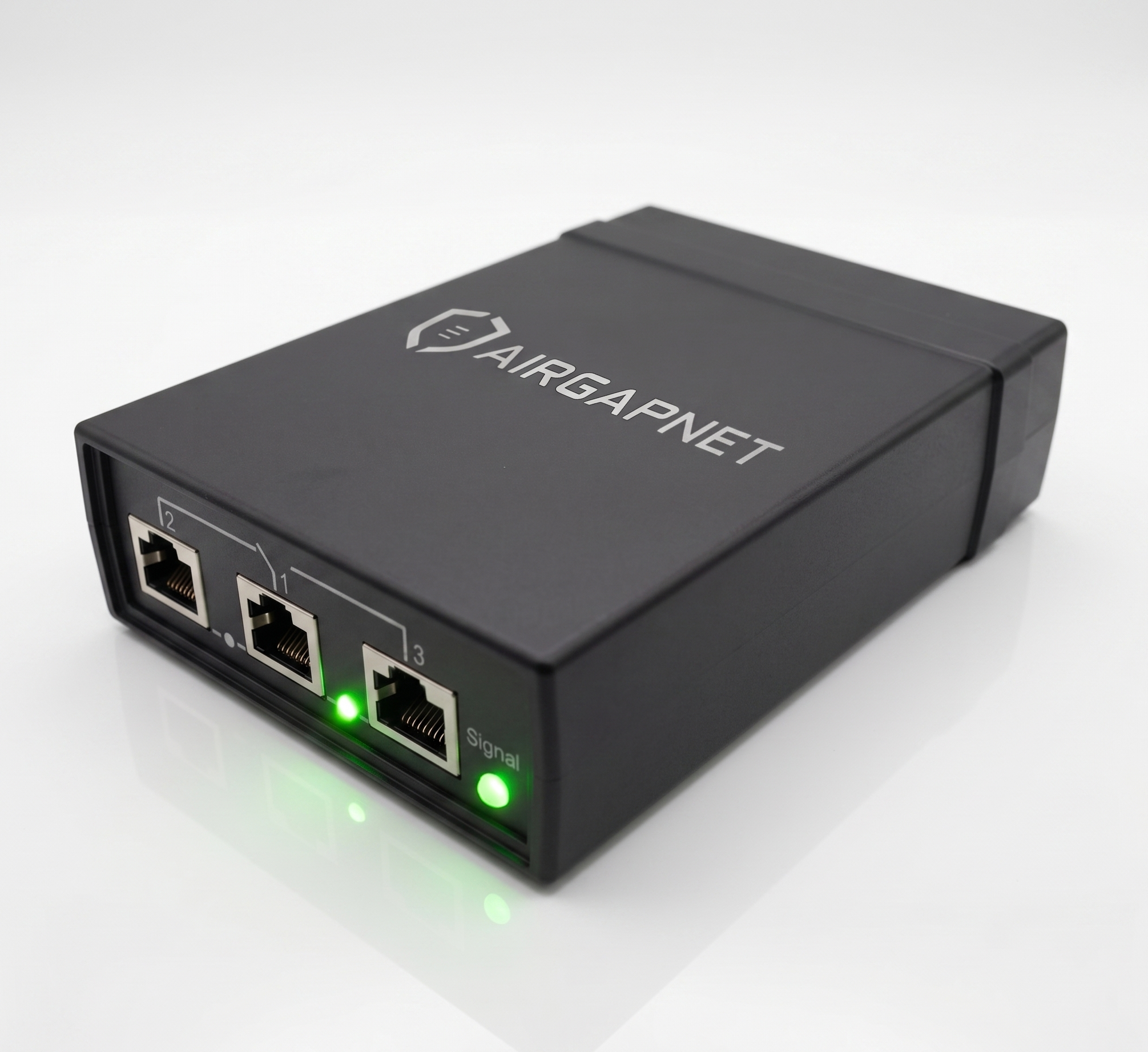
Do not automate approval from the same environment the isolation is intended to protect without considering compromise. AIRGAPNET uses a separate cellular control path so the decision channel can remain independent of the protected Ethernet link. That design still needs authorised users, secure account management and a documented process.
Design for incident response
During an incident, teams may need to isolate systems quickly and communicate out of band. Predefined actions are safer than improvisation under pressure. Document which paths can be physically disconnected, who has authority to act and how essential operations continue.
After containment, reconnect deliberately. Validate systems before introducing them into a clean recovery zone and avoid exposing known-good backups to an environment that has not been eradicated. Physical controls can support this sequence, but the recovery plan determines whether they are used correctly.
Measure whether exposure is actually reduced
Track the number, duration and purpose of connection windows, along with failed or extended sessions. Compare this evidence with the previous always-on design. The useful metric is not the presence of a device but the reduction in unnecessary reachable time without missed backups, delayed maintenance or unsafe workarounds.
Review alerts and incident exercises for attempts to reach the protected zone while disconnected. Also inspect exceptions: repeated emergency openings or windows that never close may indicate that the architecture does not match the operational need. Security controls improve when their real use is visible.
Decision checklist
Questions to resolve before implementation
- Identify critical systems that do not need continuous network reachability.
- Remove or govern alternate paths around the intended isolation boundary.
- Protect backup administration separately from the data-transfer workflow.
- Apply least privilege and monitoring during every connected window.
- Test restoration and safe reconnection, not only backup creation.
- Include physical isolation actions in ransomware exercises and runbooks.
Common questions
Questions teams ask first
Can physical isolation stop ransomware?
It can block network traffic across a path while that path is physically disconnected. It cannot stop ransomware arriving through another route or acting on a system during an authorised connection, so it must be part of layered prevention and recovery.
Are offline backups enough for ransomware recovery?
No. Backups must also be valid, protected, retained appropriately and regularly restored in tests. Organisations need clean systems, credentials, procedures and realistic recovery-time objectives.
Should a backup network ever connect to production?
Most backup workflows require controlled data transfer. The design should minimise the allowed sources, duration and privileges, then remove unnecessary reachability after the transfer. Architecture depends on the backup platform and recovery requirements.
Official references